







ARTICLES
A Preliminary Study of Dispute Resolution Practice under China’s Anti-Sanctions Legal Framework
A Preliminary Study of Dispute Resolution Practice under China’s Anti-Sanctions Legal Framework
I. Introduction
The global economic and trade landscape is undergoing profound change. As geopolitical tensions intensify, sanctions and related export-control measures continue to proliferate, creating unprecedented compliance risks and dispute-resolution challenges for companies engaged in cross-border business. At the same time, China’s anti-sanctions legal framework has developed rapidly in recent years, providing a domestic-law framework and practical guidance for addressing foreign sanctions and their extraterritorial effects.
Against the backdrop of recent legislative developments and judicial practice, this article examines the concept and principal forms of sanctions and the anti-sanctions legal framework established by China. It offers practical guidance from two perspectives: analysis of representative dispute patterns and strategic choices throughout the life cycle of a dispute.
Disclaimer: This article provides a general overview of China's legal framework concerning sanctions response and dispute resolution. It is intended for informational purposes only and does not constitute legal advice. The views expressed herein are those of the authors and do not represent the position of any governmental authority. The discussion below focuses on the statutory mechanisms available under PRC law and their potential application in cross-border disputes, without expressing any view on the validity or legitimacy of any particular sanctions regime.
II. The Concept and Principal Forms of Sanctions
Although international law lacks a universally accepted authoritative definition of “sanctions”, state practice generally defines them as non-forcible coercive or restrictive measures adopted by one or more states to compel a particular state, entity, or individual to change its conduct or policy.
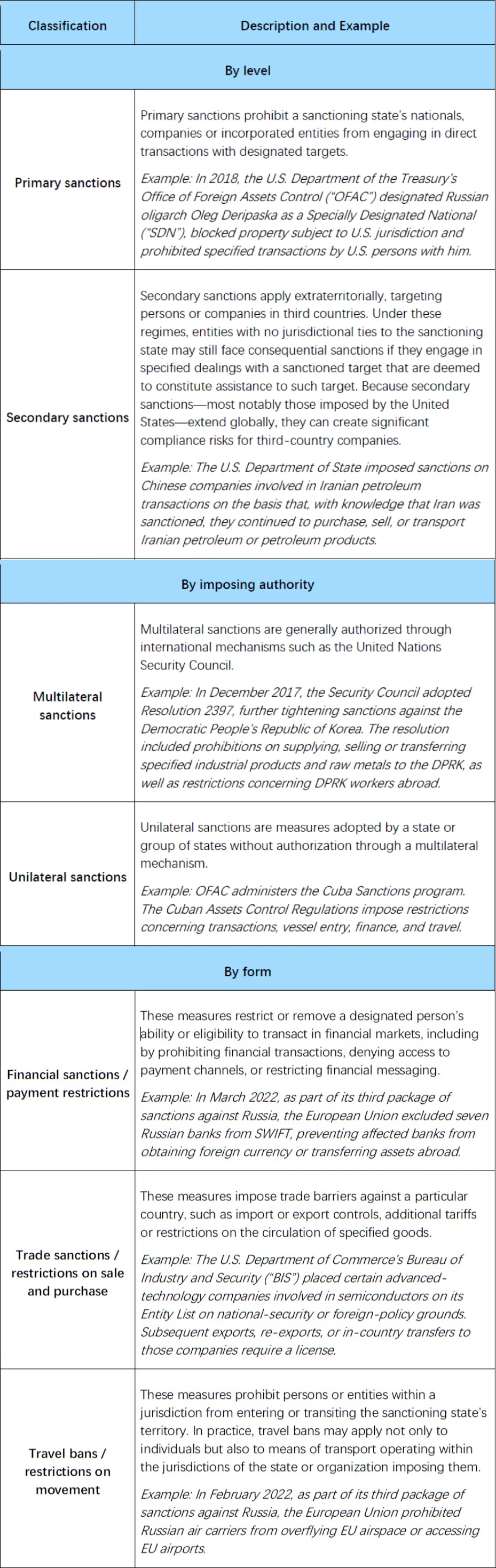
Sanctions typically affecting multinational companies may be classified by their level, the imposing authority, and their specific form, as set out below:
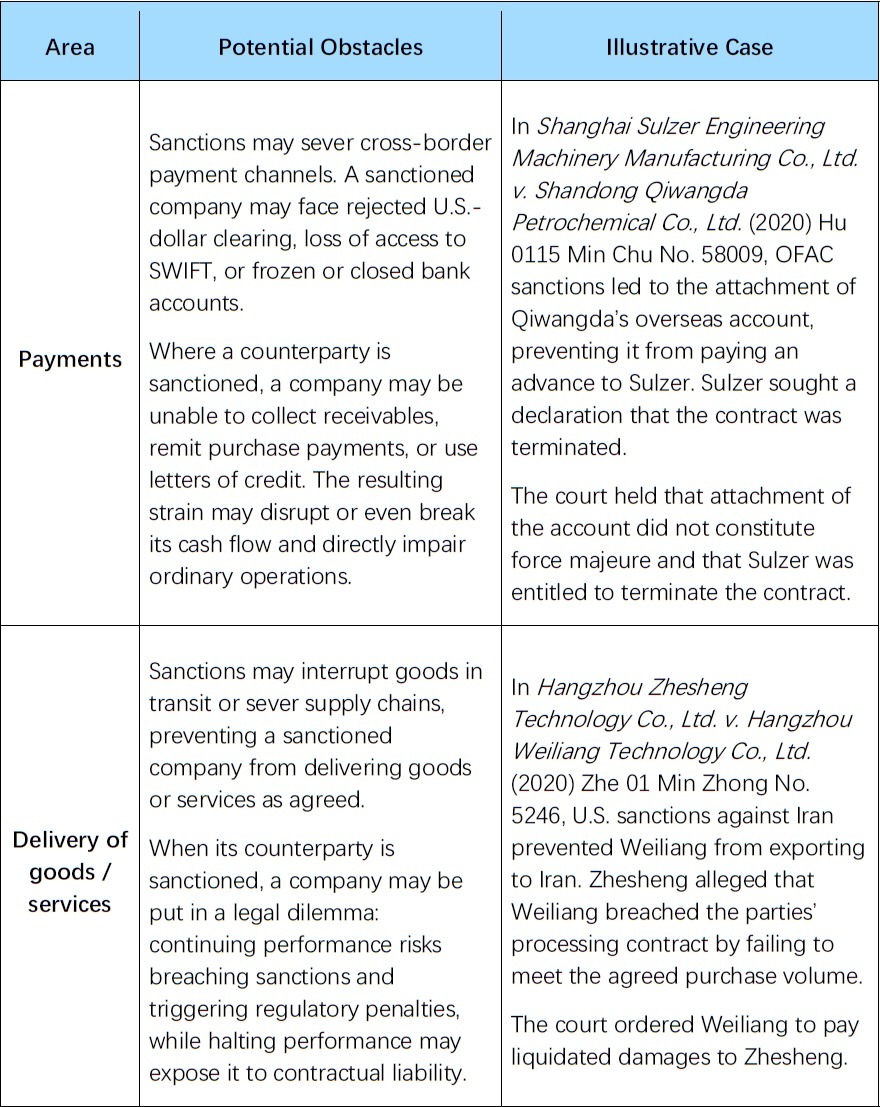
Once sanctions are imposed, affected companies may encounter obstacles to payments and contractual performance:
III. China’s Anti-Sanctions Legal Framework
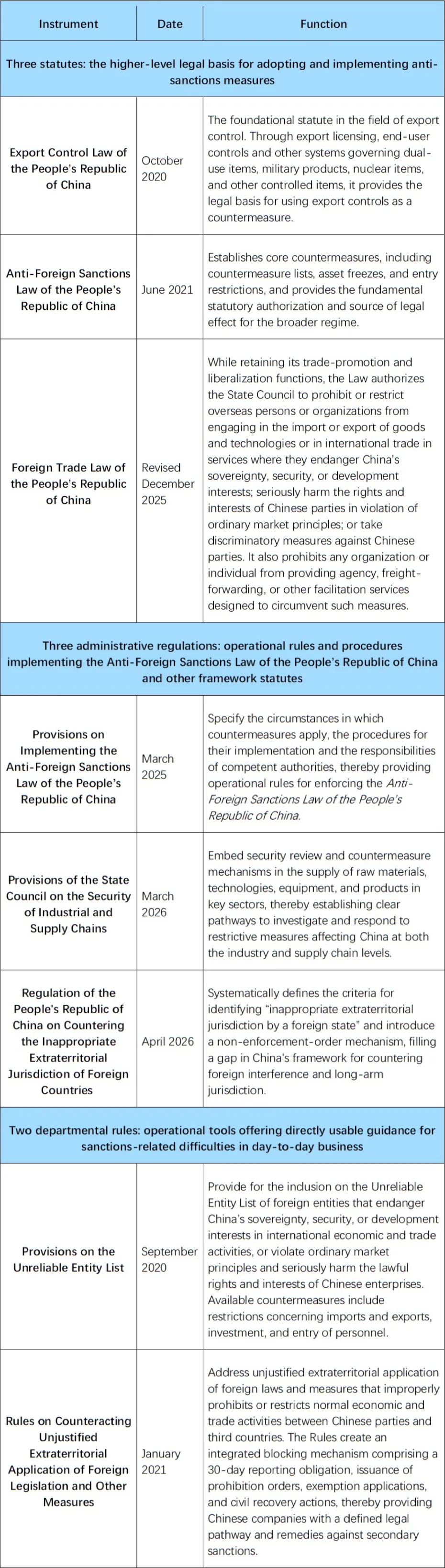
Following years of sustained development and systematic planning, China’s anti-sanctions regime has evolved from fragmented emergency legislation into a cohesive and integrated legal framework. A series of new rules and prohibition orders issued in 2026 mark the latest stage in the development of this framework, offering important legal tools for anti-sanctions litigation.
IV. Litigation Applications of China’s Anti-Sanctions Laws
1. A Case in Practice
Tort Dispute between Marine Engineering Company J and Equipment Company S
In 2024, China’s anti-sanctions measures were applied in judicial practice for the first time, when the Nanjing Maritime Court heard the country’s first anti-sanctions lawsuit: a tort dispute between a marine engineering company and an equipment company. The case was concluded in 2024 and was later selected as one of the “Top Ten Cases Promoting the Rule of Law Process in 2025.”
The essential facts were as follows: In September 2023, Company J, a Chinese marine engineering company, entered into a Shipbuilding Subcontract for a total consideration of USD 19.45 million (equivalent at the time to approximately RMB 140 million) with Company S, a Swiss marine-equipment company. After Company J completed the relevant work and substantially performed its obligations, OFAC added Company J to the SDN List. Company S then suspended an outstanding payment of approximately USD 11.86 million (equivalent at the time to approximately RMB 86 million), citing the potential risks of settling in U.S. dollars, and required Company J to first apply to OFAC for delisting. To protect its interests, Company J applied to the Nanjing Maritime Court for the pre-action arrest of Company S’s vessel in China. The court granted the application.
On October 11, 2024, Company J brought proceedings against Company S before the Nanjing Maritime Court under Article 12 of the Anti-Foreign Sanctions Law of the People’s Republic of China[1], seeking damages. Although the contract provided that disputes would be referred to arbitration administered by the London Court of International Arbitration (“LCIA”), the Nanjing Maritime Court characterized the case as a tort dispute and assumed jurisdiction. Notably, the court adopted a “live attachment” approach—permitting the vessel to remain at the shipyard for ongoing refitting while strictly restricting its departure from the port—thereby minimizing disruption to the construction schedule and international financing. With the court actively mediating, the parties ultimately settled. To secure the release of the vessel, Company S lodged a counter-security deposit of USD 14 million (equivalent at the time to approximately RMB 99.743 million) with the court. Subsequently, through enforcement proceedings, the court transferred the settlement amount from this deposit to Company J, thereby concluding the enforcement phase and fulfilling the mediation agreement.
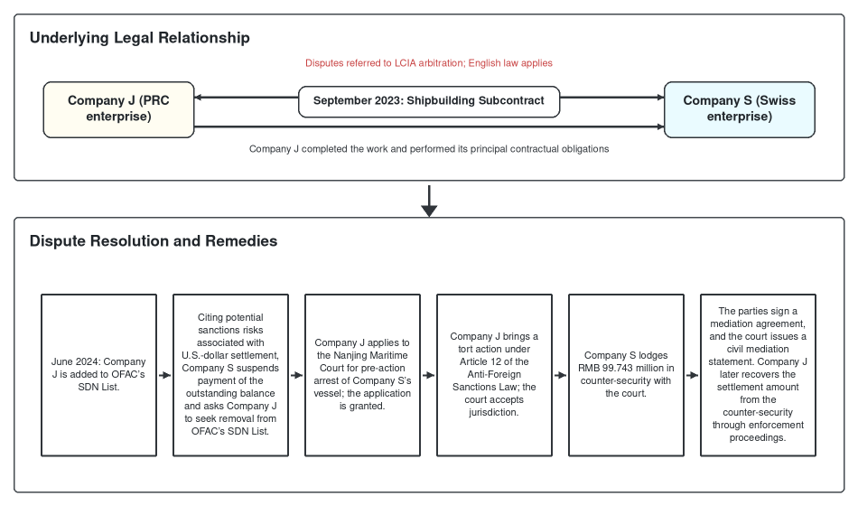
Figure 1: The first anti-sanctions lawsuit in China concluded in 2025
2. Scenario Analysis
Company J’s interests were ultimately protected not only because Article 12 of the Anti-Foreign Sanctions Law of the People’s Republic of China provided a remedial basis, but also because of several case-specific factors: (i) the dispute was maritime in nature; (ii) the Swiss company had valuable assets in China; and (iii) Company S did not object to jurisdiction, accepted settlement before a Chinese court and used counter-security to facilitate the ultimate payment of the settlement sum. A change in any of these factors may necessitate a corresponding change in strategy.
The following variations illustrate the various challenges that companies may encounter in similar circumstances and the practical avenues potentially available to them.
Scenario 1
Assume that Company J and Company S are parties to an international sale of goods, that their contract is governed by the United Nations Convention on Contracts for the International Sale of Goods (“CISG”), and that Company S’s only assets in China are a batch of equipment temporarily present for an exhibition. All other facts remain unchanged.
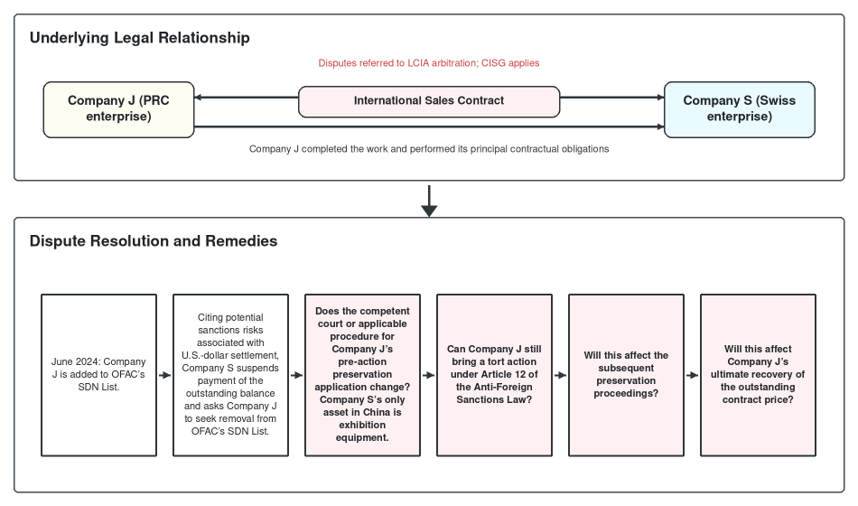
Figure 2: Scenario 1—an ordinary international sale of goods
In the original case, despite the English governing-law clause and the LCIA arbitration agreement, the Nanjing Maritime Court was able to arrest Company S’s vessel by relying on Article 14 of the Special Maritime Procedure Law of the People’s Republic of China: “Maritime claim preservation shall not be bound by a jurisdiction agreement or arbitration agreement between the parties in respect of the maritime claim.”
In this scenario, however, the dispute involves an ordinary international sale of goods rather than a specialized maritime dispute. Company J would therefore need to seek ordinary pre-action preservation from the people’s court at the place where the property is located, where the respondent is domiciled, or which has jurisdiction over the merits, under Article 104 of the Civil Procedure Law of the People’s Republic of China. Under Article 29 of this Law, jurisdiction over the tort claim lies with the court at the place where the tort occurred or where the defendant is domiciled. Because the parties have an arbitration agreement, a court may also proceed more cautiously when deciding whether to grant pre-action preservation.
Accordingly, in a dispute arising from a larger international sale of goods, a party could, in theory, still bring an anti-sanctions tort claim under Article 12 of the Anti-Foreign Sanctions Law of the People’s Republic of China and seek pre-action preservation from a competent court. In the absence of Chinese judicial precedent addressing this specific scenario, however, the prospects of success remain uncertain.
Scenario 2
Assume that Company S has no valuable assets in China. All other facts remain unchanged.
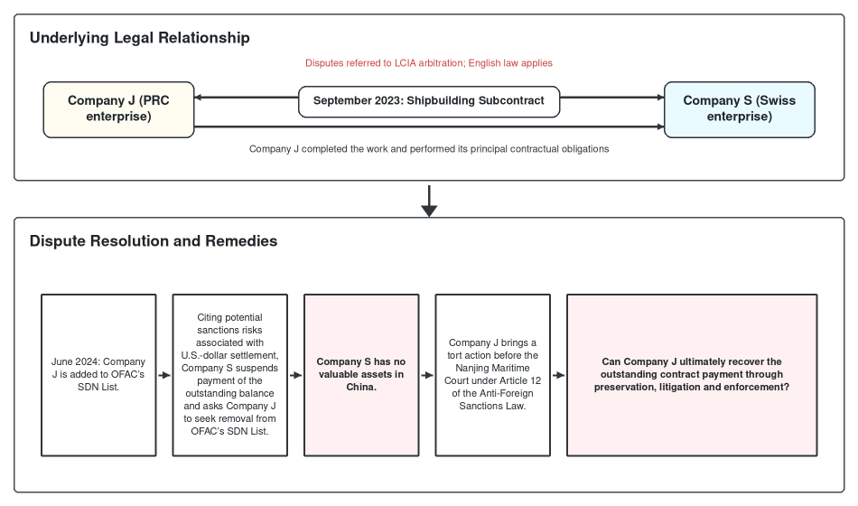
Figure 3: Scenario 2—no valuable assets in China
In the original case, Company S retained assets in China. Company J obtained pre-action preservation by arresting those assets, and Company S ultimately facilitated the settlement payment to Company J by lodging counter-security with the court.
In this scenario, by contrast, Company S has no valuable assets in China and would have a stronger incentive to challenge the Chinese court’s jurisdiction after Company J commences proceedings.
Even if Company S does not object and Company J obtains a favorable judgment, Company J would have to seek the recognition and enforcement of that Chinese judgment in Switzerland. China and Switzerland have not concluded a bilateral judicial-assistance treaty on reciprocal recognition and enforcement of judgments. The recognition and enforcement of Chinese judgments abroad also remain difficult, and there appears to be no Swiss precedent. Company J would therefore face greater obstacles to achieving actual recovery.
In light of these obstacles and the cost of cross-border enforcement, the more feasible and cost-effective route would be for Company J to commence LCIA arbitration under the arbitration agreement and seek payment of the outstanding contract price. Because the Convention on the Recognition and Enforcement of Foreign Arbitral Awards (the “New York Convention”) obliges contracting states to recognize and enforce foreign arbitral awards, the cross-border enforcement of an arbitral award is generally more convenient and practicable than the enforcement of a foreign court judgment.
Scenario 3
Assume that, after Company J commences proceedings in China, the court upholds Company S’s jurisdictional objection based on the arbitration clause.
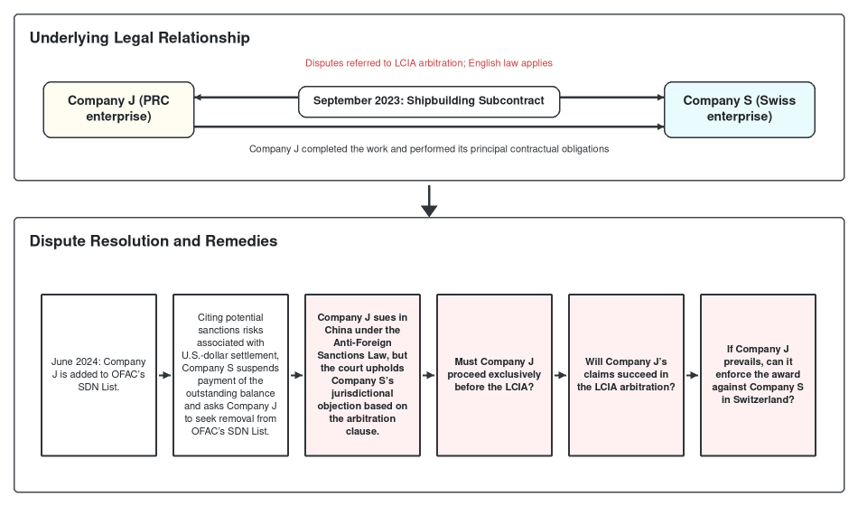
Figure 4: Scenario 3—the arbitration agreement is upheld
In the original case, Company S did not rely on the LCIA clause to challenge the Nanjing Maritime Court’s jurisdiction. Once its assets had been preserved in China, Company S may have had little interest in prolonging the dispute through a procedural objection: its more immediate objective was likely to obtain the release of the property, and it may not have objected in principle to paying the contract price in a manner that did not breach applicable sanctions.
If Company S did object and the Chinese court upheld that objection, Company J would likely be confined to pursuing relief through LCIA arbitration, as agreed in the contract. Although an award is ordinarily easier to recognize and enforce between New York Convention states—both the United Kingdom and Switzerland are contracting states—the more material consideration in this scenario is that geopolitical developments and related regulatory measures may give rise to additional procedural, sanctions-compliance, payment, or enforcement complexities in LCIA arbitration. From Company J’s perspective, overseas dispute resolution may therefore involve greater legal and practical uncertainty, which must be assessed under the applicable rules and law.
3. Other Potential Litigation Routes under the Anti-Sanctions Framework
Beyond Article 12 of the Anti-Foreign Sanctions Law of the People’s Republic of China, which has now been tested in practice, other provisions within the broader anti-sanctions framework may provide additional causes of action for companies affected by sanctions but have yet to be tested through litigation.
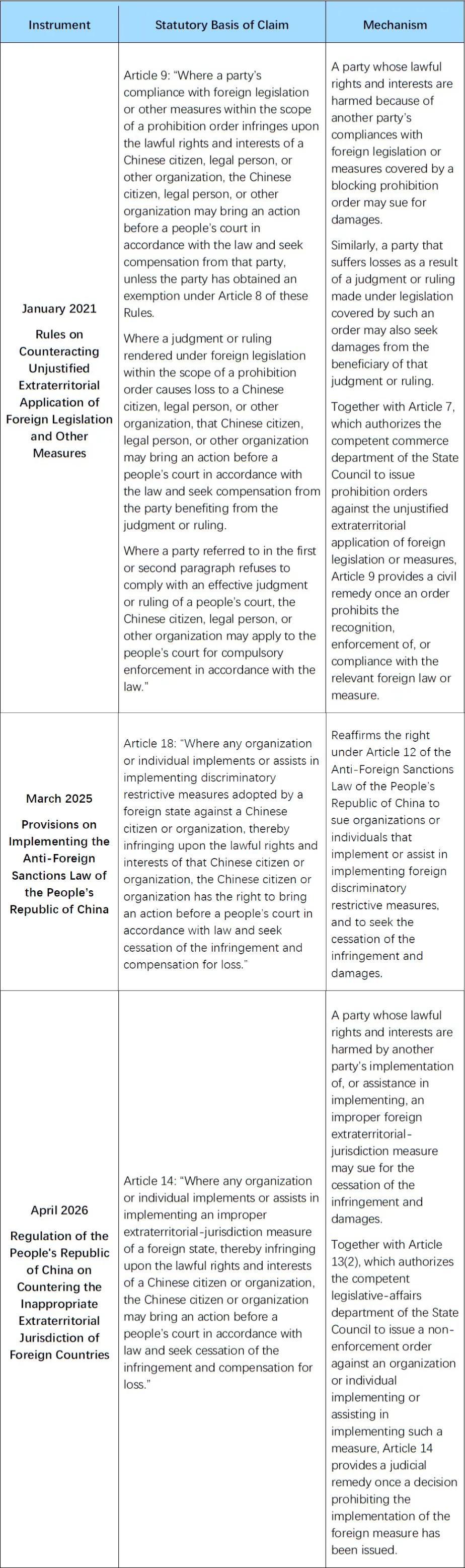
To date, no publicly available judgments have been identified in an action brought under the Rules on Counteracting Unjustified Extraterritorial Application of Foreign Legislation and Other Measures or the Regulation of the People's Republic of China on Countering the Inappropriate Extraterritorial Jurisdiction of Foreign Countries. The statutory trigger for such actions nevertheless appears to have materialized. On May 2, 2026, the Ministry of Commerce issued its first blocking prohibition order, providing that the U.S. sanctions designating five Chinese oil-refining companies as SDNs on the basis of Iranian petroleum transactions “shall not be recognized, enforced, or complied with.” Shortly thereafter, on May 15, 2026, the Ministry of Justice issued the first non-enforcement order, finding that the European Union’s cross-border investigation of Nuctech under the Foreign Subsidies Regulation constituted improper extraterritorial jurisdiction and prohibiting any organization or individual from implementing or assisting in its implementation.
As Chinese companies face increasingly exposure to secondary sanctions and improper extraterritorial jurisdiction—and Chinese authorities respond with countermeasures and prohibition orders—these provisions may develop into new litigation tools alongside Article 12 of the Anti-Foreign Sanctions Law of the People’s Republic of China.
V. Using Legal Tools throughout the Resolution of Sanctions-Related Disputes
In an increasingly fragmented sanctions and trade-control environment, sanctions affect more than individual transactions. They simultaneously disrupt corporate management, commercial operations, and legal compliance. At the management level, sanctions may force a company to reorganize supply chains, suspend planned projects, and reassess counterparties’ compliance risks. Commercially, constraints on cross-border payments, insurance, and financing—alongside counterparties’ unilateral termination of contracts for their own compliance reasons—are increasingly common. Companies may suffer direct financial losses and forfeit established market opportunities when transactions are interrupted. Legally, they must navigate sanctions-related issues in contractual performance, dispute resolution, and cross-border enforcement. A misstep may create a compliance Catch-22: compliance with foreign sanctions may breach obligations under the governing law of the contract, while non-compliance may expose the company to secondary sanctions.
The preceding analysis of anti-sanctions litigation and its variations also shows that the practical effectiveness of China’s anti-sanctions framework remains at an early stage of development and must be coordinated with other tools for protecting corporate rights and interests.
1. Pre-Dispute Prevention: Contract Drafting
For companies, ex ante prevention is the first step in compliance governance and sanctions-risk mitigation. Contract drafting is the stage at which the contracting parties exercise the greatest control. Careful attention to key clauses enables companies to anticipate and mitigate potential sanctions-related disruptions.
The dispute-resolution clause is the clearest example of this, as it can help address matters that the statutory anti-sanctions framework cannot objectively cover. To optimize the protection of Chinese companies, dispute-resolution mechanisms may be prioritized as follows:
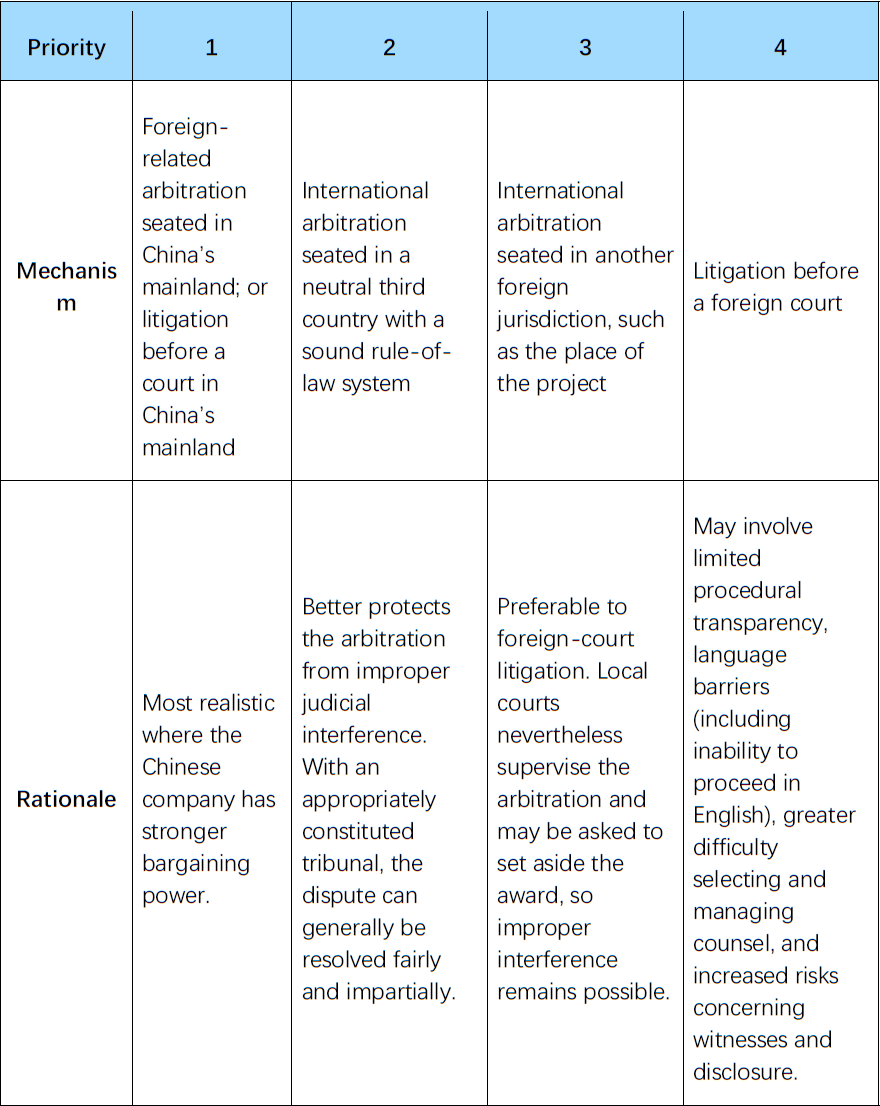
Arbitral institutions in China’s mainland have become significantly more international in recent years. Where circumstances permit, a company should attempt to negotiate for the application of PRC law and the jurisdiction of a arbitral institution in the Chinese mainland. Within China, apart from arbitration’s inherent procedural advantages, choosing a Chinese court rather than arbitration does not materially alter concerns about the baseline neutrality or institutional inclination.
International arbitration clauses are nevertheless more common in cross-border commerce. As Scenarios 2 and 3 illustrate, even under China’s existing anti-sanctions framework, an anti-sanctions tort claim brought by a Chinese company may ultimately be referred to a foreign arbitral tribunal because the overseas defendant has insufficient assets in China available for preservation or enforcement, or because the contract contains an arbitration clause that provides for a foreign arbitral seat.
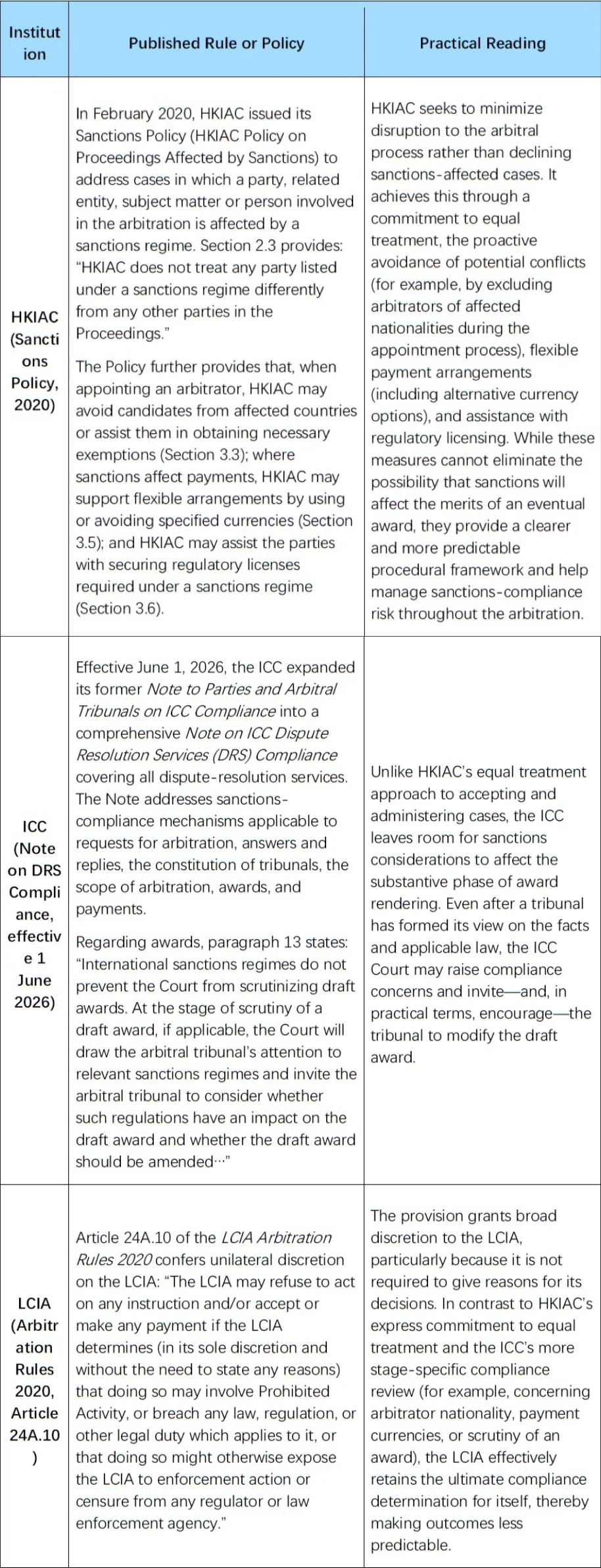
In this context, selecting a foreign seat and institution that are relatively neutral on sanctions issues at the contract-negotiation stage can provide procedural safeguards after a dispute arises. The Singapore International Arbitration Centre (“SIAC”) is a strong candidate because of its growing presence in the Chinese market, the procedural-efficiency and cost-control features of its latest rules, and Singapore’s geopolitical advantages as a neutral Asian seat. The Hong Kong International Arbitration Centre (“HKIAC”) also offers distinctive advantages for preservation and enforcement against assets in China’s mainland.
Some arbitral institutions have also adopted specific rules or policies addressing sanctions-related matters. Publicly available rules, policies, or guidance can make the procedure more predictable than institutional silence, but predictability does not mean that all institutional positions are identical. Approaches vary from relatively accommodating to cautious on matters such as express commitments to equal treatment, whether sanctions compliance extends to scrutiny of the substance of an award, and the degree of unilateral discretion retained by the institution:
2. During the Dispute: Interim Measures, Parallel Proceedings, Force Majeure, and Responses to Sanctions-Based Defenses
Once a dispute has entered formal proceedings, the central focus shifts from proactive risk mitigation to securing the most favorable outcome within the applicable procedural framework. Whether the matter proceeds through domestic litigation, foreign-related arbitration, international arbitration, or foreign litigation, a company must make careful strategic decisions about timely interim relief, lawful evidence gathering, the coordination of parallel proceedings, and the deployment of particular defenses.
First, as China’s first anti-sanctions lawsuit demonstrates, the effective use of preservation and other interim measures can protect both procedural and substantive interests. Where a counterparty may dissipate assets or where evidence may be lost, a company should seek asset preservation, evidence preservation, or act preservation (injunctive relief) from the competent court or arbitral institution as early as possible, laying the foundation for effective enforcement of the eventual judgment or award. In international arbitration, emergency arbitrator procedures offered by HKIAC, SIAC, and the ICC can provide interim relief before the tribunal is formally constituted, effectively addressing the inherent timing gap.
Second, anti-sanctions litigation creates at least a theoretical possibility of parallel proceedings and jurisdictional coordination. Where overseas proceedings have already begun, however, a company should carefully assess the necessity and strategic value of commencing or maintaining parallel proceedings in China. This includes evaluating whether to seek an anti-suit injunction to restrain the counterparty from pursuing the foreign action.
Third, where sanctions obstruct performance, a sanctioned party may attempt to invoke force majeure or a change of circumstances to exclude or mitigate liability.
Article 180(2) of the Civil Code of the People’s Republic of China defines force majeure as an “objective circumstance that is unforeseeable, unavoidable, and insurmountable.”[2]Article 7.1.7(1) of the UNIDROIT Principles of International Commercial Contracts[3] and Article 79(1) of the CISG[4] adopt similar standards, referring to an impediment beyond a party’s control whose consequences could not reasonably have been avoided or overcome.
Chinese courts generally apply rigorous scrutiny to force majeure defenses in sanctions-related cases. In (2018) Yun 0112 Min Chu No. 10128, the court held that, given the international trade environment at the time, a U.S. government freeze on payment funds was not unforeseeable to a company specializing in foreign trade and therefore did not constitute force majeure. In (2018) Hu 0115 Min Chu No. 34577, the court found that the defendant could discharge the debt by converting renminbi into U.S. dollars in China, so sanctions had not made performance objectively impossible. In (2021) Lu 0691 Min Chu No. 423, the defendant’s affiliate had supplied the claimant under other contracts, leading the court to conclude that the alleged sanctions obstacle could be overcome. By contrast, in (2019) Liao 0102 Min Chu No. 10452-1, the court accepted that a defendant bank had grounds to freeze the listed claimant’s account and suspend non-counter services. Because the claimant failed to prove that it did not meet the sanctions criteria or had applied for delisting, the court found that it lacked the necessary standing to bring the claim. The result effectively upheld the bank’s defense that sanctions justified the suspension of contractual performance. Overall, a company relying solely on the fact of its designation is unlikely to establish force majeure in Chinese litigation.
International tribunals likewise tend to strictly assess whether sanctions constitute force majeure. In JSC Power Machines v. Vietnam Oil and Gas Group and Petrovietnam Technical Service Corporation (SIAC Case No. ARB274/19/AB), the tribunal held that, although the claimant could not control the United States’ imposition of sanctions, it could control the conduct that triggered them. The claimant knew or should have known that supplying generating units to the project would attract U.S. sanctions, yet failed to take necessary precautions. It also failed to take reasonable steps to avoid or overcome the sanctions: after designation, it did not actively seek removal from the SDN List and continued to participate in sanctions-related economic activity. Sanctions, therefore, did not establish a force-majeure defense to non-performance.
In RTI Ltd v. MUR Shipping BV [2024] UKSC 18, an arbitral tribunal had initially rejected MUR’s force-majeure position because, although the contract required freight to be paid in U.S. dollars, RTI—whose parent was sanctioned by the United States—could have mitigated the impact by offering payment in euros. The UK Supreme Court ultimately reversed that conclusion. It held that a contractual requirement to exercise “reasonable endeavors” did not compel a party to accept non-contractual performance. In this case, the claim that sanctions constituted force majeure succeeded because the parties had expressly agreed on the currency of payment, and using an alternative currency to avoid sanctions would have deprived it of its contractual right to payment in the specified currency. Where a contract does not prescribe the payment method, however, it remains highly uncertain whether the inability to use a particular currency because of sanctions will amount to force majeure.
As to the doctrine of change of circumstances, Article 533 of the Civil Code of the People’s Republic of China provides that, where an unforeseeable material change in the basic conditions of a contract is not a commercial risk and continued performance would be manifestly unfair to one party, the affected party may request renegotiation or ask a court or arbitral tribunal to modify or terminate the contract.[5]Article 6.2.2 of the UNIDROIT Principles contains a comparable rule.[6]A change of circumstances does not require objective impossibility; rather, it focuses on whether the contractual equilibrium has been fundamentally disrupted. For high-value contracts or long-term commercial relationships, a party that is temporarily unable to perform because of sanctions but wishes to resume performance later may consider seeking modification—such as a different payment currency or extended performance period—to preserve the relationship and avoid the losses associated with termination. However, this route remains underdeveloped in sanctions disputes. In (2015) Hu 1 Zhong Min 4 (Shang) Zhong No. 2737, (2016) Zhe 03 Min Zhong No. 660, (2019) Gui 0303 Min Chu No. 1138, and (2019) Gui 0303 Min Chu No. 1139, the courts treated international trade frictions, economic sanctions, and comparable external factors as commercial risks rather than changes of circumstances capable of excusing liability.
Fourth, China’s anti-sanctions framework can prevent a counterparty from relying on a foreign state’s sanctions to excuse non-performance. In (2023) Hu 72 Min Chu No. 1936, a dispute concerning a contract for the carriage of goods by sea between a Hong Kong company and a Singapore carrier and its Chinese affiliate—selected by the Supreme People’s Court as one of the 2025 typical maritime cases—the carrier refused to issue a bill of lading because the shipper had been listed under another country’s sanctions. After the Hong Kong company obtained a maritime injunction from the Shanghai Maritime Court, the carrier issued the bill of lading but unilaterally returned the cargo. In the ensuing damages action, the court held that Article 4 of the PRC Law on the Application of Laws to Foreign-Related Civil Relations and the mandatory rule in Article 12 of the Anti-Foreign Sanctions Law of the People’s Republic of China applied with priority. The court reasoned that the refusal to perform the carriage obligation out of concern over collateral exposure to another country’s sanctions against a Chinese enterprise constituted assistance in implementing foreign discriminatory restrictive measures, violated mandatory Chinese law, and could not lawfully exclude or reduce the carrier’s liability for breach.
3. Post-Dispute Relief: Seeking Delisting and Resisting Recognition and Enforcement of Awards
Even after dispute resolution proceedings have largely concluded, remedial options may remain. A company may continue to mitigate the adverse effects of a sanctions decision or arbitral award through the post-dispute mechanisms available under the relevant legal systems.
First, a company may apply to the competent authority or institution for removal from a sanctions list. Under OFAC’s SDN delisting mechanism, for example, a company may submit a written petition demonstrating that the original basis for designation no longer exists or that the relevant circumstances have materially changed. Given that the process is often lengthy and its outcome uncertain, an affected company should generally initiate it promptly and pursue it consistently.
Second, where a sanctions-affected award that gives effect to unilateral sanctions is rendered by a tribunal composed of nationals of the sanctioning state, or would be enforced in breach of applicable anti-sanctions legislation, a company may attempt to obtain post-dispute relief by resisting its recognition and enforcement.
At the recognition and enforcement stage, Article V of the New York Convention permits a company to request that the court at the place of enforcement refuse recognition and enforcement on grounds including public policy or non-compliance with the agreed arbitral procedure or tribunal composition. Chinese courts have consistently construed the public-policy exception narrowly. The breach of a regulatory rule does not automatically amount to a violation of public policy, meaning that the available scope of this remedy is limited.
Experience in other jurisdictions nevertheless shows that the route has succeeded in at least some sanctioned states. In Case No. A42-5661/2025, the Arbitrazh Court of the Murmansk Region of the Russian Federation held that an ICC award allowing a German contractor to cease providing services to the Port of Lavna because of EU sanctions against Russia violated Russian public policy. The court also noted that the arbitrators were nationals of states designated as “unfriendly” under Russian Presidential Decree No. 79 of February 28, 2022, and Decree No. 95 of March 5, 2022. It therefore refused the recognition and enforcement of the award.
Courts in different enforcement jurisdictions do not interpret and apply the Article V grounds uniformly. A company must therefore analyze the law, judicial practice, and facts of the particular enforcement forum and assess carefully whether procedural objections are viable. Although this route remains highly uncertain—especially where relief is sought in the sanctioning state—it may still form part of a coordinated strategy to secure a more favorable enforcement outcome and mitigate the impact of sanctions on the company’s lawful rights and interests.
VI. Conclusion
As China’s anti-sanctions framework continues to develop, litigation under that framework may play an increasingly important role in corporate legal risk management. In addition to providing remedies after a dispute has arisen, it may inform preventive risk assessment and contribute to the resolution of disputes. When used appropriately, such litigation may provide companies affected by sanctions with additional legal options and support more balanced negotiations with international counterparties.
The framework remains at a relatively early stage of development, however, and litigation alone cannot address every aspect of a sanctions-related matter. Its practical effectiveness will depend on the specific legal and factual circumstances, as well as a range of commercial, regulatory, and enforcement considerations. Statutory remedies should therefore be considered alongside effective corporate compliance and risk-management measures.
Looking ahead, as China’s anti-sanctions legal framework continues to evolve, relevant judicial experience develops, and corporate compliance practices mature, Chinese companies may be better equipped to manage legal and operational uncertainty in an increasingly complex international environment. By aligning available legal remedies with broader business and compliance strategies, companies can strengthen their resilience and pursue sustainable development.
[Notes]
[1] See Article 12 of the Anti-Foreign Sanctions Law of the People’s Republic of China: “No organization or individual may implement or assist in implementing discriminatory restrictive measures taken by a foreign state against Chinese citizens or organizations. Where an organization or individual violates the preceding paragraph and infringes upon the lawful rights and interests of a Chinese citizen or organization, the Chinese citizen or organization may institute an action before a people’s court in accordance with law, requesting cessation of the infringement and compensation for losses.”
[2] See Article 180 paragraph 2 of the Civil Code: “Force majeure means any objective circumstance that is unforeseeable, unavoidable and insurmountable.”
[3] See Article 7.1.7(1) of the UNIDROIT Principles of International Commercial Contracts 2016: “Non-performance by a party is excused if that party proves that the non-performance was due to an impediment beyond its control and that it could not reasonably be expected to have taken the impediment into account at the time of the conclusion of the contract or to have avoided or overcome it or its consequences.”
[4] See Article 79(1) of the United Nations Convention on Contracts for the International Sale of Goods: “A party is not liable for a failure to perform any of its obligations if it proves that the failure was due to an impediment beyond its control and that it could not reasonably be expected to have taken the impediment into account at the time of the conclusion of the contract or to have avoided or overcome it, or its consequences.”
[5] See Article 533 of the Civil Code: “After a contract is formed, where a fundamental condition upon which the contract is concluded is significantly changed which are unforeseeable by the parties upon conclusion of the contract and which is not one of the commercial risks, if continuing performance of the contract is obviously unfair to one of the parties, the party that is adversely affected may re-negotiate with the other party; where such an agreement cannot be reached within a reasonable period of time, the parties may request the people’s court or an arbitration institution to modify or terminate the contract. The people’s court or an arbitration institution shall modify or terminate the contract in compliance with the principle of fairness, taking into account the actual circumstances of the case.”
[6] See Article 6.2.2 of the UNIDROIT Principles of International Commercial Contracts 2016: “There is hardship where the occurrence of events fundamentally alters the equilibrium of the contract either because the cost of a party’s performance has increased or because the value of the performance a party receives has diminished, and (a) the events occur or become known to the disadvantaged party after the conclusion of the contract; (b) the events could not reasonably have been taken into account by the disadvantaged party at the time of the conclusion of the contract; (c) the events are beyond the control of the disadvantaged party; and (d) the risk of the events was not assumed by the disadvantaged party.”